

Vitamin C Forms: Ascorbic Acid vs MAP vs THD
Vitamin C is the most-studied brightener in skincare, but not all forms are equal. L-ascorbic acid (the most potent, least stable), MAP or magnesium ascorbyl phosphate (stable, gentle), and THD or tetrahexyldecyl ascorbate (lipid-soluble, deep-penetrating) each solve different problems. This guide breaks down which form makes sense for your skin—and why most people should probably start with MAP.
This article contains affiliate links. If you buy through them, PDRN.AI earns a small commission at no extra cost to you. See our affiliate disclosure.
The Quick Answer
L-Ascorbic Acid (L-AA):
- Highest potency for collagen induction, clinically proven
- Requires pH 3.5 or lower; can irritate sensitive skin
- Oxidizes quickly (degrades in 3–6 months)
- Best for: users with resilient skin already using actives
MAP (Magnesium Ascorbyl Phosphate):
- Stable, shelf-friendly, stays potent 6–12 months
- Non-acidic, rarely triggers irritation
- Lower bioavailability but proven effective clinically
- Best for: sensitive skin, first-time vitamin C users, those prioritizing stability
THD (Tetrahexyldecyl Ascorbate):
- Lipid-soluble, penetrates deeper than water-soluble forms
- Stable and pH-neutral, minimal irritation
- High cost, fewer products available
- Best for: advanced users wanting maximum penetration
What These Names Actually Mean
When dermatologists discuss vitamin C, they’re usually talking about L-ascorbic acid (L-AA)—the pure form with the most clinical evidence for collagen induction, photoprotection, and hyperpigmentation reversal. It’s the gold standard. But L-AA has one critical flaw: it oxidizes immediately upon opening, degrading into inactive compounds.
To solve this problem, brands create “derivatives”—chemical modifications that make vitamin C stable. Derivatives don’t work immediately; your skin must convert them back to L-ascorbic acid before they become active.
MAP (magnesium ascorbyl phosphate) is a water-soluble derivative. Think of it as L-AA with a protective chemical shield. Your skin enzymes remove the shield, revealing the active vitamin C. The trade-off: limited penetration because of the shield.
THD (tetrahexyldecyl ascorbate) is oil-soluble. Its protective “shield” is a long lipid chain that makes it fat-loving. Since skin lipids are oil-based, THD slides through the stratum corneum (outer layer) like it belongs there, achieving deeper penetration than water-soluble forms.
Both derivatives are chemically stable and shelf-friendly. Both ultimately deliver the same active ingredient. The question is which route—water-soluble or oil-soluble—makes sense for your skin.
L-Ascorbic Acid: The Clinical Gold Standard
L-ascorbic acid dominates peer-reviewed literature. It’s the form used in nearly every clinical study proving vitamin C’s collagen-boosting powers. The evidence is solid: topical L-AA at 10–20% increases dermal collagen density and fades hyperpigmentation over 8–12 weeks.
The problem? L-AA requires pH 3.5 or lower to remain stable. That acidic environment irritates sensitive skin. Users commonly report redness, stinging, and peeling—especially in the first week. Once opened, the serum oxidizes visibly: if it turns yellow or brown, the L-AA has degraded into dehydroascorbic acid (inactive).
Most L-AA serums ship in dark, airless bottles with stabilizers (ferulic acid + vitamin E). Even so, once opened, potency declines over 3–6 months.
Who should use L-AA? Users with non-reactive skin, those already accustomed to actives (retinoids, AHAs), and those willing to replace the serum frequently. The payoff is maximum collagen induction and the broadest clinical evidence base.
L-ascorbic acid is the only vitamin C form with robust clinical evidence, but that potency comes with irritation risk and shelf-life complexity.
MAP: The Underrated Middle Ground
MAP (magnesium ascorbyl phosphate) deserves more attention. It’s the stable, gentler sibling of L-ascorbic acid—and it genuinely works.
In clinical studies, MAP at 10–15% is comparable to L-AA at similar concentrations for brightening. It converts to L-ascorbic acid in skin, though not 1:1. The real advantage? Stability. MAP is shelf-stable at neutral pH, doesn’t oxidize, and survives months of exposure without degradation.
Reddit skincare communities consistently note that MAP is what most people should start with. It’s forgiving. You won’t irritate your barrier. Results come slowly but reliably—visible brightening over 8–12 weeks, same timeline as L-AA. For users starting a new routine, MAP removes friction while maintaining efficacy.
The downside is marketing: MAP lacks the clinical star power of L-AA. Brands prefer advertising the “most studied” form, even if less practical for most users.
THD: The Penetration Advantage
THD (tetrahexyldecyl ascorbate) is the newest player and most interesting from a chemistry perspective. Unlike water-soluble MAP, THD is oil-soluble, which changes where and how deep it penetrates skin.
Claims of 150× deeper penetration than L-AA are marketing exaggerations, but the underlying chemistry is sound: THD’s lipid tail makes it fat-loving, so it slides through the oily stratum corneum more efficiently than water-soluble forms.
Practical consequence? Deeper antioxidant coverage. THD is also pH-neutral (no acidic formulation needed), making it compatible with sensitive-skin ingredients. Irritation risk is minimal.
The cost is high—THD serums start at $40–80 per bottle versus $15–30 for MAP or L-AA. Few brands carry it, and clinical evidence is limited compared to L-AA (most studies come from manufacturers or paid research).
How to Layer Vitamin C Correctly
Vitamin C works best applied to clean, dry skin immediately after cleansing, before other serums. Timing matters because vitamin C is water- or alcohol-based, and layering multiple serums dilutes concentration.
Standard order:
- Cleanse and pat dry completely
- Apply vitamin C serum (let it dry 5–10 minutes)
- Apply lightweight hydrator (HA serum or toner)
- Add other actives if desired (retinoid at night, or niacinamide if needed)
- Seal with moisturizer and SPF (sunscreen is mandatory—vitamin C won’t work without it)
Avoid mixing vitamin C with niacinamide in the same step (the combination can reduce stability). Give yourself 2–4 weeks on vitamin C alone before adding other actives. Using vitamin C is a 12-week minimum commitment. Brightening is subtle and gradual—consistency beats product-switching.
EDITORIAL PICKS
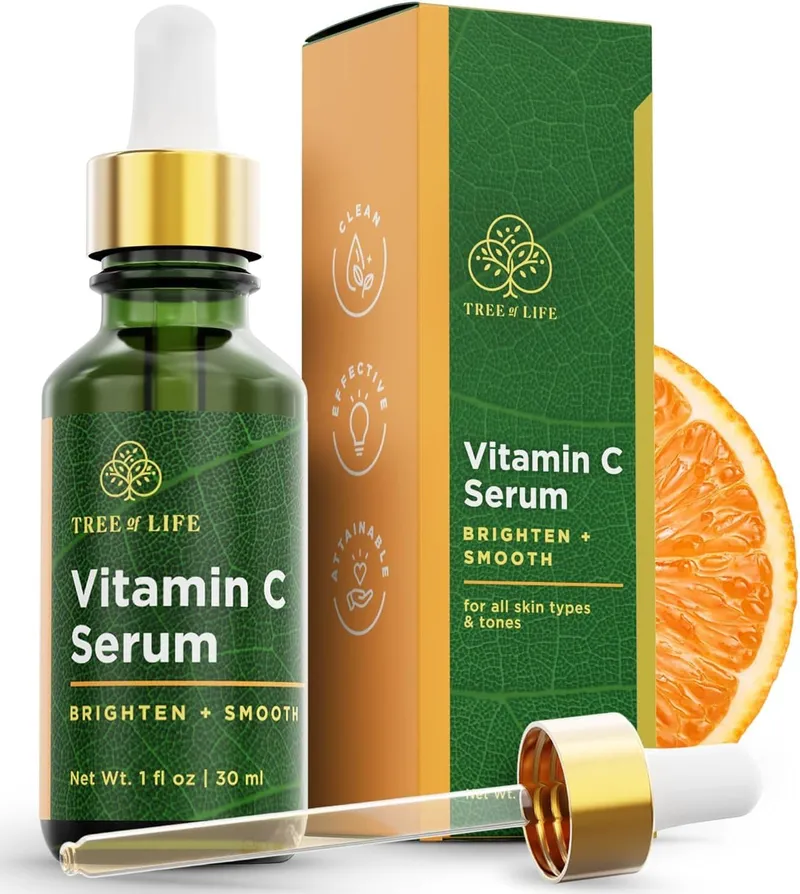
BEST OVERALL
Tree of Life Beauty Vitamin C
4.3 ★ · 56,208 reviews
Ascorbic acid formula with 56K+ reviews. Reliable potency, entry-level price. Slight irritation risk for sensitive skin, but proven brightening track record.
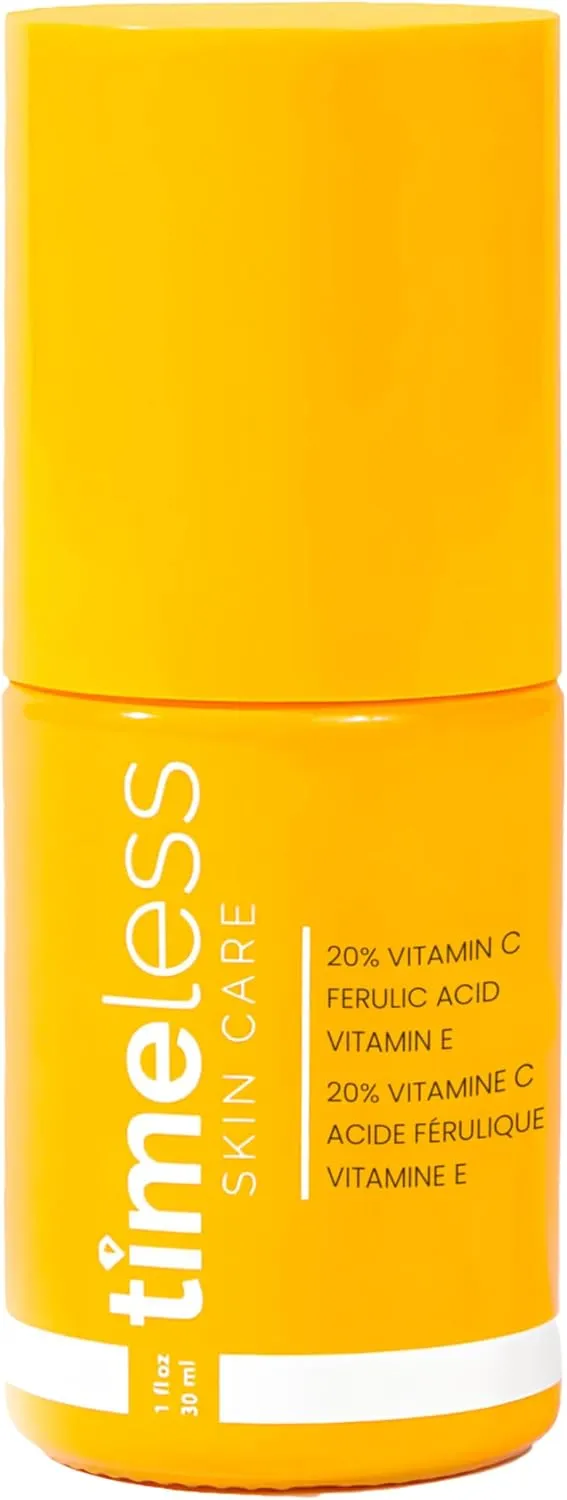
BEST FOR SENSITIVE SKIN
Timeless Skin Care Vitamin C
4.2 ★ · 10,409 reviews
Ascorbic acid + ferulic acid + vitamin E formula stabilizes well. Gentler than pure L-AA alone. Good for users who tolerate actives moderately.
PREMIUM STRENGTH
SeoulCeuticals 20% Vitamin C
4.6 ★ · 1,318 reviews
Double the concentration of standard serums. For committed users ready for aggressive brightening. High irritation risk if you're not used to actives.
Most People Should Start with MAP
The uncomfortable truth: most beauty marketing pushes L-ascorbic acid because it has the most clinical evidence. But most people don’t have resilient enough skin to tolerate it long-term without irritation.
MAP is the pragmatic choice. It brightens reliably, rarely irritates, and stays stable. You won’t see overnight transformations, but you’ll see steady brightening over 12 weeks. That’s the reality of vitamin C—it’s subtle, not miraculous.
If you’ve already used vitamin C successfully and want to upgrade, THD offers deeper penetration. If you’re starting fresh, MAP removes friction. L-AA is for users who’ve proven they can tolerate strong actives.
Common questions
Which vitamin C form brightens the fastest?
L-ascorbic acid works fastest—clinical studies show visible brightening in 4–8 weeks at 15–20% concentration. MAP takes 8–12 weeks, with more subtle results. THD timeline is similar to MAP but with potentially deeper long-term effects. Patience is the reality with all forms.
Can I use vitamin C if I have sensitive skin?
Yes, but start with MAP or lower-concentration L-AA (under 10%). THD is also gentle because it’s pH-neutral. Introduce one vitamin C product at a time, use 2–3 times per week for the first month, then increase to daily if tolerated. If you experience redness or stinging beyond week two, discontinue and try a different form.
Does the form matter more than the concentration?
Both matter significantly. A 10% L-AA serum outperforms a 5% MAP serum in raw potency. But a 10% L-AA serum that’s oxidized in your cabinet is worse than a stable 8% MAP serum. In real-world scenarios, form often trumps concentration because degradation is the hidden factor.
Can I layer vitamin C with retinol or AHAs?
Yes, vitamin C pairs well with retinoids and AHAs/BHAs—they target complementary mechanisms. However, introduce one active at a time. Use vitamin C in the AM with SPF (mandatory), and retinol at night. Don’t start all three simultaneously; give yourself 2–4 weeks per addition.
How long does a vitamin C serum actually stay fresh?
L-AA: 3–6 months after opening (can oxidize within days in warm, humid climates). MAP: 6–12 months. THD: 8–12 months. All types last longer unopened in cool, dark storage. Store in the fridge if you’re in a humid climate. Once the product yellows or browns, it’s degraded.